Showing posts with label sewing. Show all posts

Wednesday, January 3, 2018

Victorian Tea Gown (1882)

I got a bee in my bonnet to make a tea gown 'round about June. I thought it would be great for comfy Sunday wear at Costume College. I was right :D


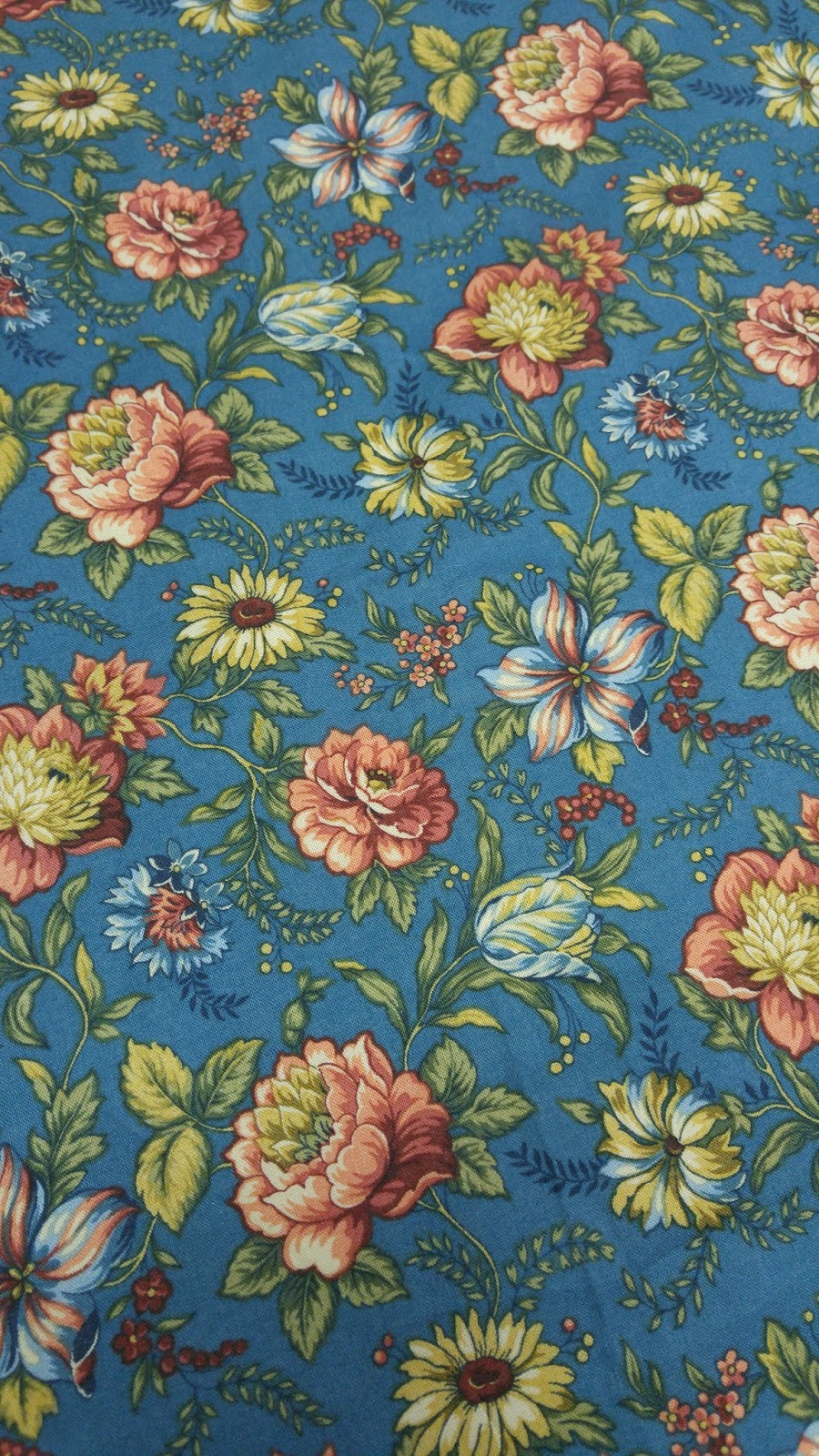
This was a very straightforward make from Truly Victorian. I made my usual adjustment to the bust area (removing roughly 3"), and lowered the necklines just a tad (half an inch or so). I remembered seeing a gorgeous tea gown made in the curtain-along fabric on Festive Attyre's round-up, so I used a similar looking print for mine, liberated from my mum's fabric stash in early 2014:


It's a very standard weight quilting cotton, and I have TONS of it, which is great because I love it.

This came together in just a few days. The bodice and hem are lined with a medium-weight natural linen. I polled my Facebook and Instagram feeds for button options. The three colours I had the most of from my Gramma's button stash each had their cheerleaders, but I went with brown.


I put the buttonholes too far into the gown and so had to put the buttons on the very edge of the front seam. Something I will keep in mind for my next Victorian make. Buttons and facings got sewn while watching Downton Abbey, and I had SO MANY pins for the facing that I got to make tons of flowers in my pin cushion!


The back neckline did not get a facing, and instead was covered by self bias-tape. I used a whole yard to make the tape, so I have a ton of that now too.

I haven't put darts into the bodice yet, because I'm still undecided on the fit! Without darts, the gown fits my uncorseted body perfectly (so great for lazy Sunday wear!), but if I want to wear a corset, I would need darts to fit it better. Hard choices! It also needs some trimming. The fabric is so busy, but I found this wonderful tea gown at the Met that would be perfectly matched to this gown. (oooh now that I'm looking at it again, I really wanna get started on putting that gorgeous trim on!)

On Sunday I wore it with a cami and leggings underneath, a petticoat (also by Truly Victorian), and accessorized with my pineapple reticule and the honeycomb shawl that I thought would be extra weight in my suitcase. It came in handy, as this was the least amount of layers I wore all weekend and I was cold!

Saturday, December 30, 2017

IKEA LJUSOGA Italian Gown

When I saw Fresh Frippery's post on a group of dresses made with IKEA's Ljusoga bedsheets, I knew I needed to get in on this gorgeous fabric! Shortly after, I had sold my old phone and had a little extra cash, so I bought the king-sized set and waited for inspiration to strike.

I can't remember if inspiration struck so much as that I wanted to get going on this project. The Modern Mantua-Maker's stunning Italian gown was definitely one inspiration, as was the Italian gown pattern in the An Agreeable Tyrant catalog. As much as I love the pleated back gowns, I wanted to try a new style, and the quarter-backed Italian gowns were all the rage this past year. So that's what I decided to do.

I started with petticoats, as I usually do. I hand-sewed the printed one, and machined the white taffeta one. I also misjudged skirt lengths and got not enough of the taffeta, so it is extra short! I've since added a ruffle that I can't decide if it looks silly or not.


White poly taffeta (front view).

Worn over the white one (back view).

Then it was time to make the dress. I again used Reconstructing History's 822 pattern as a base, and then modified it heavily using the gown pattern on Page 39 of Patterns of Fashion 1.


Original pattern in pale green, finished (mostly) pattern in dark green.

My mock-up was OK...


Aside from the stays issue. The grey cover shows where the stomacher-front stays hit on my body. I didn't want that much showing over top, so that's when I decided I needed a new pair of stays!

I'd made a custom draft from Stays & Corsets, but was really disappointed with the fit (the draft has you take off a minimal amount of circumference, resulting in a snug t-shirt fit and not a supportive garment). I'll write more about them in another post, but I ended up making the 1780s stays from a pattern originally provided by RalphPink.com, which I believe is a straight-up draft from Corsets and Crinolines. It is no longer available there.

And I was really glad I did, because the new one changed the shape of my bust! My original pair flattened my bust and pushed it up, this one pushes it more forward. This was the shape I wanted for this gown. I did have to add some width and height at the CF neckline to ensure overlap and modesty, but that was an easy fix. Then it was time to forge ahead!

According to the date stamps on my photos, this dress got picked up again roughly 2.5 weeks before Costume College. Nothing like the last minute to get started. Here's the finished back on July 11:


And my first on-me fitting with the proper bits on July 13:


I'm putting this unflattering photo in because of that whole "myth of perfection" series that ran around the blogosphere last year. Welcome to what I look like when I sew on days where the temperature reached +30C. For comparison, as I write this it's -35C, and I look much the same ;)

I was pleased with the fit, and the amount of overlap I had at CF. I ended up cutting a lot of it off, but I was grateful for it.


By July 15, the bodice had sleeves, so I moved on to the skirt. I used the POF gown again, cutting my panels the full height of the diagram, and shaped the front top edge before pleating. I used a full width of the duvet cover, and a little extra (which I machined on with cotton thread; by then I just didn't want to do another long plain seam; and also had to piece a tiny corner on at the bottom where it met the skirt). I cut and hemmed slits for pocket access and hemmed the front edges (thought I had while stitching the hem: were silk selvedges nice in the 1700s, and you wouldn't need to hem them? Brilliant!). Then I pleated forever, having to redo it at least once. I split the center back to accomodate the point at the back, but stitched it back up a couple inches. I had two layers of pins going on to keep everything in place, and semi live-blogged about the process on Instagram:

Getting there... #18thcentury #handsewn #duvetcover #pinsforever

A post shared by totchipanda (@totchipanda) on


A note on the back construction: I used a technique previously known as "weird running whip stitch thingy" (Stay-ing Alive) or "the stitch with no name" (Burnley & Trowbridge; link goes to a YouTube video of how to do it) and is now known as the English Stitch (The American Duchess Guide to 18th Century Dressmaking). I LOVE this stitch, it makes a neat, tiny seam that is very secure, and gets your back sewn together with one pass of the needle. Very efficient!


I finished the bulk of the work in a week! I sewed mostly in the evenings after work, for 3-4 hours at a time, while watching RuPaul's Drag Race or Star Trek: Deep Space Nine on Netflix, and the skirt was completed on July 15 by 6pm. My fingers hurt (really need to focus on proper thimble usage) and I was so proud of what I'd accomplished.

The petticoat and gown got hemmed a few days later, and I despaired on trimming. By this time, talk was going around the blogosphere about "millinery", a term I'd only heard applied to hats before but seems to have meant all the little finishing touches (so, kinda like a hat) like ruffles and accessories. I made a couple of little ruffles to go into the elbows of this gown but did not have the brain power to suss out a neckline treatment. So I cut a length of scrap taffeta with pinking shears and tied it into a bow to pin to the neckline, and cut a triangle of voile to use as a neckerchief and fill the neckline in. (I needed it anyway, the straps I added to the stays were totally visible on my shoulders.)

A few hours before the gala, I took a quick peek into the dealers hall, where a booth was set up with almost every kind of trim anyone could want. I picked out a pleated organza (certainly poly) and turquoise velvet ribbon and rushed upstairs to start sewing it on.


All in all, I'm really happy with this dress! It was definitely a challenging project, but it suited where I am in my sewing journey, and I'm looking forward to the next one.


Friday, December 29, 2017

Curtain-Along Gown

Back in 2013, I was utterly charmed by the curtain-along gown, hosted by Festive Attyre. It was so neat to see everyone in their gowns, how widely the print could be used across the decades! It wasn't until I saw Amanda's dress-in-a-day gown, however, (which I found months after the dress was posted) that I decided I need to join in. I kept an eye on Amazon and finally picked up some curtain panels, 3 cream and 1 black. (I'm still on the hunt for 2 more black panels, just so you know...)

#curtainalong gown is nearly finished! Just needs a hem :)

A post shared by totchipanda (@totchipanda) on


I don't remember the timeline on this anymore. I started sewing it while I was watching The Amazing Race on cable TV, intending to hand-sew the entire thing -- my first 100% handsewn gown -- and see how long it would take. I'm pretty sure it was 2014, with a push of finishing in 2015, where it sat without a hem for another 2 years. I initially wasn't going to take it to Costume College, feeling that I didn't have time to finish the hemming, but I did end up taking it, and hemming it on Thursday in between my limited class and the opening of registration. I wore it on Saturday of Costume College.

Because it's been so long since I started, I'm not really sure what some of my thought processes were. My petticoat was weirdly long, puddling on the floor at my feet. When I tried it on over a bum pad, the back length was fine, but the front was still too long. I pinned it up and gave it a really fast hem, trying to angle in nearly 4" of fabric at center front. (I need to take that out and do it properly!)


The cat liked it though. Hiding under skirts is his favourite!

The gown hem is also much deeper at front than sides or back, but because it's open, it was a lot easier to do.

I had fitted it over a pair of stays with a stomacher. I used the Reconstructing History pattern as the bodice base, with guidance from The Fashionable Past for construction, and Gown #3 in Costume Close-up for the sleeve, trimming, and skirt tying-up placement. The trim was cut with pinking shears and gathered by hand before being applied.


And how long did it take to hand-sew? Not that long. I can't even estimate for this one since it took so long to do it, but my recent hand-sewn gown was done (sans petticoat) in a week of mostly 3-4 hour chunks.


The Facts:

Material:
100% cotton

Pattern: Started out in life as Reconstructing History 822

Year: 1770-ish

Notions: cotton thread

How historically accurate is it? I would probably pass in-period

Hours to complete: at a guess, 30-40.

First worn: July 29, 2017 at Costume College

Total cost: $50 CDN

Sunday, August 14, 2016

HSM '16: #2 Tucks and Pleating: Market Hat

At the end of January, I got an opportunity to volunteer for a local Regency event, to which I enthusiastically agreed shortly into February. I immediately started planning my gown, wanting to both wear my new stays, and also not wear last year's gown for the 4th time in a row. Not the least because last year's gown has a lower back, and my stays would be very visible over the neckline. Oops?

I wondered how I could possibly fit my gown and/or accessories into the challenge theme. It only occurred to me late in the month that the pleating required to fit the skirt width into the center back would absolutely qualify, because up until then, I had already started another item that was "done enough" to also work. And, I think, be more suitable, since the challenge info states "make a garment that features tucks and pleating for the shape or decoration", and this item is most definitely shaped by the pleats.

Introducing: The Market Hat!

You've likely seen some version of this hat around the internet before. I first saw it way back in summer 2013, in photos of the Curtain-Along meet-up at Costume College that year. Oh, what a lovely hat Loren wore! Then, in 2014, I realized I needed a similar hat in order to recreate an art piece for the Art Challenge (which I still have yet to complete). Where could I find a pattern for such an enchanting object?

At the time there wasn't many. I scoured the internet and came up with a few ideas -- Kannik's Korner has a similar item, that I could probably use to suit my needs, and The Sign of the Golden Scissors. But, both of them seemed awfully expensive at the time, especially since I couldn't find shipping rates. I thought I might get around to developing my own pattern, if I ever decided on what I was actually looking at. I had a hard time imagining the 3D object laid out like a 2D pattern, so I put off thinking about it for a long, long time.

I did not get around to drafting one. My chosen pattern was not any less expensive, but several factors made it the best option. Maggie of Undressing the Historical Lady put out a pattern in between these two in cost, and unlike the others, was a print-at-home pattern, so at least I wouldn't have to pay shipping! That pushed into the "best option" category, in fact, and I bought it last summer when the exchange rate was sliiiiightly more reasonable than it is now.

I tried to look at options for the brim board at Michael's, but all I could find was a humongous sheet of material that I didn't feel comfortable purchasing, even if I used a coupon. It was 24" x 36" and I only needed a fraction of that. I used a found-item from work that would otherwise have been recycled, sheets of super thin cardboard that came on top of a stack of loose paper to protect it. But since they were only 8.5" x 11", I had to use several sheets (three, in fact) to get a piece wide enough and stable enough to go into the brim. And even though I followed the directions for the brim, pressing in my seam allowances and stitching by hand, my brim board was just too big to fit into it. I had to trim and trim and trim until I could stitch up the seam allowance for the caul to attach to. (I take full responsibility for this issue. The pattern pieces fit just fine together, and I think my board ended up being thicker than the recommended material which took away from the fabric too much.)

The caul's shape, as directed in the pattern, is achieved entirely by pleating. One could theoretically play with the pleats, how many and how deep, to achieve a different look. I have 9 pleats on either side of a central box pleat. And then I immediately had to run to the mirror to try it on!


It's been languishing ever since, waiting for the final two steps (finishing the caul/brim seam and then decorating), but I would not feel bad about wearing it should the need arise at this exact moment. I used some of the leftover fabric, actually in a separate cut, for one of my accessories for my ball outfit, but saved the rest from this cut to make a "ribbon" to decorate with. Partly complicated by the fact that I could not find my pinking shears for most of the month. They had decided, for the last 6 months, to make their home with my partner-in-crime.

And since this post is ONLY 6 months late (HA!), it still hasn't been finished... and I've misplaced the spare fabric... but I could still totally wear it right this moment!

The Challenge: #2 Tucks & Pleats
Fabric: 100% polyester
Pattern: 18th Century Bonnet/Market Hat
Year: late 18th century
Notions: thread, ribbon, bias tape, thin cardboard
How historically accurate is it?: Looks great! I don't know if this type of cardboard was being produced in-era, and we won't even touch polyester.
Hours to complete: 10 or so.
First worn: Not yet
Total cost: $27 CDN for the pattern, materials were all free-to-me! I would expect to spend roughly $30-$40 CDN (without the pattern) on this if I were to buy all new materials. Silk is difficult to get in Edmonton, and with the exchange rate being so poor right now, even "cheap" silk is expensive to ship in. Americans might be able to do this project for under $20 US.

Want to admire more market hats? Maggie's own market hat, which you can see on the Etsy listing, is also visible here at American Duchess; Lauren of American Duchess has a lovely one (this is more of a research page, so be sure to click through to entries at the beginning of July to see the finished item in action!); The Couture Courtesan has a beautiful piece made from her own pattern; Peryn's gorgeous hat (and dress); and so did Festive Attyre with Maggie's pattern. Got more? I'd love to see them! Even after looking at them all summer, I still think this hat is adorable!

Friday, April 24, 2015

HSM '15 #3: Stashbusting! The Sari Ballgown

Hi friends! It's been a long long time since I posted anything here, I'm sorry! This winter just kinda... happened. It seems to happen every winter, I turn around and two or three months have gone by, just like that. I didn't create anything for the 2nd challenge, Blue, and then I'd been wanting to get a hand-sewn curtain-along robe anglaise off of my sewing pile, plus the con I needed my Tauriel cosplay for was coming up really quickly, so I'd mostly just been letting myself work without the pressure of keeping up with posting. But I still reading my blogroll daily! I've been keeping on all of your fabulous creations, and y'all are just so inspiring :)

I had no idea what I was going to make for the third challenge, Stashbusting. My stash is relatively small but it's still pretty substantial. I'm wanting to get it organized, but that will have to wait for awhile yet. I need more space and/or different storage options to get through it.

Then I realized that I'd already made something that would work! Hooray! I'm sorry this post is so late, and that I don't have more pictures to go with it. I'll do a post on just the details in the future, promise :3


Nicole and myself at the ball. Photo by Janine Rose Photography.

There was a ball scheduled for February 28th. I had decided not to make anything new under pressure as I already had 2 gowns I'd made in 2013 that haven't even been worn yet. But then...

Timeline:

February 25th: See a lovely red gown that appears to have been made from a sari. Think, wait, I have a sari in my stash... Pull it out, work out a cutting layout, start cutting the sari into sections, cut the bodice, cut off one the bands from the skirt section. Pull out lining material to press it, run out of energy.

February 26th: run some errands, no sewing.

February 27th: Press lining fabric, cut out, start work on the bodice. Cut out sleeves. Go to bed.

February 28th: Wake up ridiculously early. 7-10am, work on bodice sleeves and bands, add buttonholes, prepare skirt. 10am-1pm, dance class. 1-2:30pm, make and attach skirt. 2:30-3pm, eat lunch. 3pm, go to Nicole's house to finish preparing. 3:30-7pm: attach buttons, make 3 reticules, get ready, leave for ball. 8pm: arrive really really late. Have a great night anyway.

It was a few weeks later, when I saw another participant's entry and the added "Stashed for?" line for this challenge that I realized that this dress COMPLETELY counts. I've had the sari for a long time, and the buttons used to close it are "vintage" (I've had them for 15 years, I have no idea how long they'd been stashed before that). Even though the lining fabric is relatively new, having been purchased in September, it was really my only option, as most of my stash is in various shades of blue or green, and I had purchased it without another project in mind.

This fabric has been in my stash for nearly 10 years, and has finally found it's purpose. And I am THRILLED, because it looked AWESOME. I cut the bodice with the crossed edge along the border, used one border from the skirt as the hem, and cut the other one off to use as bands for the bodice and sleeves. I am SO pleased with how this came out, and having a new dress for the ball was also excellent :D

The Challenge: #3: Stashbusting
Fabric: polyester sari (approx 5m long, still have the heavily decorated end and some short pieces), cotton sheeting for lining
Stashed for?: Sari 9.5 years, lining 6 months, buttons unknown (at least 15 years)
Pattern: La Mode Bagatelle cross-over dress, Sense and Sensibility sleeves
Year: 1810s-ish
Notions: 4 vintage buttons, thread
How historically accurate is it?: the overall look is pretty good, but that's about it lol
Hours to complete: 6-8
First worn: February 28th
Total cost: $4 (lining material purchased at $0.99/m)

Monday, January 19, 2015

HSM'15: #1: Foundations: A Corded Petticoat

I'm not really sure why I decided to make a corded petticoat. Three or four weeks ago, I might have been able to articulate it, but now, I don't remember. I guess I'd seen a few around the internet, and I loved the shape they give, so soft and lovely. And really, easier to store than a set of hoops.

So, after a bunch of research, I pulled out some fabric and random acrylic yarn and got to work. I would have preferred cotton yarn, but I'm still trying to sort my finances out after purchasing the car, and non-essential purchases are pretty much off the table for now (this will also make this session of belly dance classes very interesting since we're doing prop-work :D). But that's exciting in its own way, using only things I have on hand. We'll see how creative I manage to get with what I have :D


Front, over the 18th century bum roll.

At any rate, I had my heart set on a corded petticoat for the first HSM challenge this year. I googled "corded petticoat", which brings up lots of images, a few originals and lots of reproductions. There's a guide on ElizabethanCostuming.net, and I was completely inspired by Gina's lovely example, and it served as the basis of my "pattern".


Back, over the bum roll.

The petticoat is just two widths of fabric sewn together at the selvedges. I measured it to a finished length of about 30", with the length of the corded panel about 18". Some of the panel length was lost to off-grain fabric and of course the cording itself. The final length of the cording is 14.5", and there are 39 rows.

I debated for a couple of hours about whether to add another panel to keep cording, but then I found a list on Jennifer Rosburgh's old site with a chart of extant petticoats and the various lengths, widths, and rows of cording. I decided that 39 rows in 14.5" was plenty, and I could attach the waistband. I can always add the extra panel and more cording in the future if I decide to.

I'd also decided that I would starch the petticoat if I needed to. It was hard to judge how well the acrylic yarn would work out when the petticoat was a giant flat panel, but once I had the waistband on and could see how it looked, I was both startled and thrilled. It looked AWESOME! The cording providing so much stiffness and floof. I currently only have other time periods for undergarments, so it's shown here over an 18th century bum roll, an 1880s petticoat and an 1870s skirt.


Front, with bum roll, 1880s petticoat, and 1870s underskirt.


Back, with bum roll, 1880s petticoat, and 1870s underskirt.

I currently have it on Josephine (the dress mannequin) without the bum roll, but still in the skirts, which have a lovely A-line shape. I am just thrilled that it's done and how wonderful it looks, even without extra floof and no starching. Thrilled!

The Challenge: #1 Foundations
Fabric: poly-cotton broadcloth, acrylic yarn
Pattern: gleaned from the internet
Year: mid-1800s
Notions: a looooot of thread (I went through three bobbins-full)
How historically accurate is it?: The shape is wonderful! The materials are not accurate at all.
Hours to complete: SOOOOO MANY. Each row took 10 minutes, x39 rows... probably 8 hours of straight work.
First worn: Not yet.
Total cost: Free-to-me (all stash and also gifted items), but new materials would run in the $25 range

Friday, October 10, 2014

HSF '14: 19: Inspiration

The theme for the 19th challenge of the year is Inspiration: "One of the best things about the HSF is seeing what everyone else creates, and using it to spark your own creativity. Be inspired by one of the challengers item from HSF ’13 or HSF challenges 1-18 to make your own fabulous item." (Facebook)

While I didn't intend to make this item for a challenge, it happens to fit in quite nicely. I am submitting my quickie-"Candy Stripe" bustle :D


Version 2


I started going through the Facebook albums for inspiration. There are so many amazing things that people have been making and posting, it's been such a pleasure to take part in the challenge, even if I have been quite rubbish at making and posting my own items. Even just to see what everyone comes up with, it's been a wonderful 1.75 years! (Almost 2 years already?!) September was, as I'm sure you're aware from my previous posts, a giant time-suck, and I got precisely nothing done on the challenges due that month. October is a very short month, and then in November I will be writing a novel, so if I manage to get any sewing done, it will have to be small. The rest of the year is not looking particularly hopeful for challenge completions.

Then, as I was going through the albums, I remembered some lovely pieces, and sought them out specifically. In particular, there was two from Asa:

Lobster bustle (Photoshoot)
Mini-lobster bustle

and one from Michelle L:

Star Trek Lobster bustle

And not specifically from an HSF participant, or even made in these past 2 years, but an inspiration nonetheless:

Katherine's lobster bustle

The night before the train excursion, I knew I needed a second bustle since I would need to lend one to my sister. I toyed with the idea of a pillow or pad, and eventually settled on making a mini-lobster. I'd wanted to make one for awhile, and also try out some of the leftover tubing from my farthingale to see how it would hold up.

Spoiler: it holds up very well!


I used the bustle frame base from Truly Victorian's Petticoat with Wire Bustle. In retrospect, I should have re-cut my pattern instead of using the one from 2006, but it served its purpose. I changed the boning pattern a bit to hopefully provide a bit more support over the top curve, but I don't think I planned it quite right. I get more of a "shelf butt", and I've just noticed as I went to photograph it that the top most bone kind of collapses in to sit more in line with the bone below it. Nothing a little pad wouldn't cure, if it truly bothered me. The only other problem I found was that with the lightness of the tubing, any time I sat down the bottom tubes would curl up into the bustle and I would have to fish them back down. I think this will be alleviated by having attached the ruffle. All in all, I was quite pleased with the final result. It provides a nice shape, is very light, and I barely noticed I was wearing it at all.


Version 1

Just under a month later, I added the ruffle and waist ties to finish it. I still want to add a lace-up panel in the back so that it lays flat when not in use, but I don't have enough grommets right now to do it justice. It will have to wait, and it's totally wearable in the meantime. :)

The Challenge: #19 Inspiration
Fabric: cotton sheeting?
Pattern: Base from Truly Victorian, with inspiration from American Duchess
Year: early 1870s
Notions: thread, plumbing tubing, bias tape
How historically accurate is it?: In shape, pretty good!
Hours to complete: 3
First worn: September 13, 2014
Total cost: around $5 (mostly for the tubing)


Love this silhouette :)

Saturday, July 12, 2014

HSF '14: #12: Shape and Support: Spanish Farthingale

Oh, dear friends, you have no idea how happy I am to post this :D Are you ready for another saga of procrastination? Let's back up a few years...

2008: I wanted to make an Elizabethan outfit. I got... partway. I was, of course, sewing under a deadline, and then, with a few weeks before the event, my dear friend Mew called me about a travel opportunity that I could NOT pass up. I spent the entire time happily planning our trip instead of sewing, and did not even come close to finishing it. (Then our trip didn't happen, and it sucked big time, but that's not a tale for this blog.)

2011: I had quit my job and and spent roughly 6 weeks unemployed. I'd decided that if I wasn't working, I should be sewing. I sewed a lot that winter! Then, mid-late February, I was working on an another Elizabethan outfit, more "casual" than the one I'd started, and I distinctly remember trying to cut bias strips on my mum's freezer while I stayed with her for a day since she was recovering from surgery. I wanted to do a continuous strip and couldn't get them to line up, so I gave up. Both pieces languished.

2014: I've been wanting to get this thing done forever. I have Plans. Then I got "talked" into a group cosplay, where the character I was told to cosplay has a distinctly Elizabethan silhouette. And #12 was coming up. Perfect opportunity, or PERFECT opportunity?

Well, like all my plans, and all of my projects that sit for a long time, the pieces got separated. I couldn't find either one. I was seriously considering just starting over, but then I wanted to use the Simplicity underthings pattern, which I KNOW I have, but it's gone AWOL. I also have the Margo Anderson pattern, but I didn't want to dig it out and trace it off... (Can you see a theme?). But then, while digging in a box for the potential pattern, I found the original base. No sign (still) of the fabric I was making the bias strips out of, but no matter. The base was the important part.

For some reason, when I'd started this, I had the Margo Anderson pattern available. I have NO IDEA what possessed me to try and draft my own, especially when I was reading Margo's instructions and it was based on the same pattern I was using anyway. Sigh. I do like to complicate my own projects... So I made myself some new bias tape, figured out where I would potentially need a hem, so that I could turn up the bottom and apply the bias tape, all before closing up the side seam. Initially I'd left only one side open, and in the end, I opened up the other side seam to apply the waistband more like 18th century petticoats. It just seems more practical than a fixed waistband.

And then... it sat for a few more weeks. I finished applying the bias tape around the same time the challenge was "due", and then I just needed to get my butt to a hardware store so I could pick out my chosen hooping material: flexible plumbing tubing.


I got two rolls of tubing (50ft total) and some copper connecters, and then sat down to put the tubing in the channels. The tubing was great, flexible and easily cut with scissors. It took no time at all to insert it. I still have to close up the channels, but I couldn't resist throwing all the layers onto my mannequin!


Farthingale with Simplicity bumroll...


Taffeta petticoat...


Underskirt/forepart...


Overskirt!

It looks so awesome! I'm so happy!

The Challenge: #12: Shape and Support
Fabric: poly-cotton broadcloth (pretty sure)
Pattern: sort-of drafted by me, based on Alcega's diagrams
Year: 1580s...?
Notions: Thread, self-made bias tape, plumbing tubing, copper connectors
How historically accurate is it? In shape only.
Hours to complete: 4-5? Not including making the bias tape.
First worn: Not yet.
Total cost: $21 CDN, all for the tubing and connectors. Fabrics were all given to me :)


Side view

Sunday, May 25, 2014

Adventures in: Corsetry (The Real Thing via A Very Long Post) & HSF'14 #2: Innovation

I had a moment of AAAHHH!! (as usual...) when it came time to start on the real thing. I had two choices of fabric: some white mystery fabric that is fantabulous for corsetry - no obvious weave, but just as sturdy and non-stretchy as coutil; or some black coutil my mum gave me in the Epic Fabric Haul. I didn't want to "waste" the coutil. I thought I had seen the white fabric recently, and I should have just enough left to make a corset. Plus, white goes with EVERYTHING! But when I went to retrieve it, it was hiding, and I couldn't find it. So, black coutil it would be.

Besides, I was probably panicking about the "waste" the same way I panicked over the pink Georgian dress I made earlier this year. I have a lot more mad skillz now than I did the first time I made a corset. Besides, a single-layer corset, like this one, only takes half a yard. I have enough for another corset :) (I might try a straight-seamed corset after all, but first I have to find the first mock-up I made 7 years ago and rescue the busk!)


Fronts only.

I wanted to construct this one a little more "professionally". Because I planned on topstitching the gussets in place like I did on the mock-up, first I had to open them, press back their seams, and then I used embroidery floss to overcast the points and corners. These will be weak spots where the fabric is stitched very close to the edge. Right away, I decided on a bright green to go with my thread. How fun is bright green on black?! It's not especially even (not to mention, my greens are totally different colours), but I don't mind. I don't plan on wearing it by itself, and I think people would be more stunned that I made it instead of buying it that they'll forgive a little lopsided stitching ;)


Why make a corset look pretty if no one is going to see it? I wouldn't say that no one is going to see it, per se... I just don't plan on wearing it as a fashion layer.

All of the seams are flat-felled for a clean finish :) Blinding flash included to show a little more detail lol.

Then came the scariest part, inserting the busk. Ooooh... Right way up this time! It's actually a lot easier than one might think, mostly I was scared of hitting the edge and breaking the needle. I had visions of it flying into my eye. This is why it's recommended to wear safety goggles! Luckily, I didn't break the needle and my eye is safe for another day. Hooray!

Setting the eyelets took the longest, partly because I now live on the second floor of an apartment building, and I didn't want to annoy my neighbours by hammering in a bazillion grommets. I took my backs (still separate from the fronts) to my friend's house and set them in her basement.

Then it was time to attach front and back, and give it another quick try-on. And then... they languished. For another 6 weeks. While I waffled on what kind of boning I wanted to use. I kinda remember this because I set all the grommets right before my last dance recital on April 13th, so it'd been sitting nearly as long. Whoops. Finally, this weekend I decided that enough was enough, and just finish the thing! (Also because I wanted to work on a costume that I didn't have nearly as many supplies as I needed, and then I wanted to work on a Victorian bodice and hey, I should really finish that corset...) I decided to go with the cable ties after all. I can always pull them out later if I change my mind. The other beautiful thing about this corset is that it is so lightly boned :)


And then we get to... the reason behind the name of my blog. A number of years ago I made a costume that I decided to bind. It was the first time I'd used bias tape as binding, and I announced to my roomies the night I started that I was off to have adventures with bias tape. It was quite an experience that I've never fully recovered from LOL. Now I think of "adventures with bias tape" every time I pull it out to sew with it again.

I have a number of packets of bias tape, and I waffled on which one to use while I sewed up the last few seams (flat-felling the side seams and finishing the short channels at the back). I had nothing that would work with bright green, and the only blacks I had were either single fold or wide quilt binding. I should just make some, I thought, but what black fabric did I have that I could use? In the end, I used the wide quilt binding cut in half lengthwise. It was almost 4" wide folded out! I don't really need pre-pressed binding anyway, and the centre fold became (more or less) the edge of my fabric. I started with the bottom, sewing it to the back first, then folding it around to the front and stitching it down. I decided to use black thread to keep more focus on the up-and-down lines.

Then it was time to put in the boning. This was both extra-complicated and really really easy. The really really easy ones were the channels that were wide enough to just slip 3/8" boning straight into, easy as pie. The extra-complicated ones were the centre back, on the outside (corset) edges of the grommets. My channels ended up being exactly 3/8" wide, when the cable ties, which are thick, need 1/2". Yikes. I fought my way through it anyway, and it took FOR-EV-ER. I even restitched the edge of one channel to make it easier, and I still ended up pulling some stitches in the tight spots. I eventually resorted to being able to getting a little fabric bunched up along the tie, put the encased end under my heel, put pressure on it, grabbed the top of the fabric and pulled. It took like, 45 minutes just to do those two channels. Yikes. Make sure you leave enough room in your channels!

But once that was done, I was very excited! I wanted to try it on again before binding the top to make absolutely sure! This would be my last chance to make any changes. So back in went the lacing, and then I tried it on. And I just realized how utterly dusty my mirror is. Eep.


Oooh lookit that waist!


Oooh lookit that... Well, you can see how much the front sticks out. Silly belly.


Uneven lacing :/

I was super excited. The waist is a little tight, but when I measured it, it's tighter than I normally lace anyway. I would definitely even up the back if I was going to wear it for more than a few minutes, naturally. But overall, I was pleased. There is a top-to-bottom bone near the side that I was a little concerned about, but it sits on the outside of the hip and should not aggravate my injury. I tried a skirt on, and even though the front sticks out really far, it's not very noticeable when dressed and should be nearly invisible with a petticoat or two. I do want to try hand-bending the bottom of the busk inward, as well, but this is fine for now. I was really pleased with the lift and roundness of my "girls". I am really excited in the near future to give this bad boy a "real" run, and wear it for several hours!

When I took it off, I thought, maybe I will take a break for a bit and then finish up. But self, I said, all you have to do is bind the tops. Literally. That's it. And they're about the same length as the bottoms, it won't take hardly any time at all. For once, I listened to that little voice and I sat down to bind the top. It really felt like, for several harrowing minutes, that this would be the moment where everything went wrong. The bottom binding had been easy, but that was probably thanks in part to being unboned at that moment. There were bones in place now. Some of them were dangerously close to the edges, having crept up during the trying-on, and hard to push down thanks to the narrow channels. The only thing that went really wrong was cutting the binding a bit too short, and stabbing myself with a pin. And once I pulled the last of it through the machine and cleaned up all the threads, I was overjoyed. All I need to do now is lace it again, and just wear it. It's done. It's totally, 100% done. DONE. What a great feeling!!

Since I've not been terribly concerned with lateness so far, and this was meant to be my #2 challenge anyway, here's the HSF info :)

The Challenge: #2: Innovation (due Feb 1/14)
The Innovation: 2 part separating busk
Fabric: 100% cotton coutil
Pattern: Simplicity 2890
Year: 1860ish
Notions: thread, floss, bias binding, busk, 2-part grommets, heavy-duty cable ties.
How historically accurate is it? In shape, and hardware. Fabric is iffy, poly thread and floss and binding deeeefinitely not.
Hours to complete: Uhm... a lot, and yet, not so many. Maybe 12 hours?
First worn: Not yet.
Total cost: The busk cost roughly $10-12, the coutil was given to me (but I know it was $25/yrd, and I used 1/2 yard), and the rest came from the stash. The project cost in the $30-40 range, but the total cost to me was more like $15.

I didn't do like, any research on busks that was worth sharing. What I do know is that up until the 1830s, corsets were generally closed-fronts with a wooden busk down the front. The separating busks appears on museum corsets in the 1850s or so, and is still the standard in use today. It's an especial boon for those of us who tend to live and costume alone, as it makes getting dressed much much easier!

Tuesday, April 8, 2014

Adventures in: Corsetry (The Mock-Up)

I knew this time that making a mock-up was essential. It's not my favourite thing to do, but it really is an important step, especially for such an important garment. I want this to be as comfortable as my regular clothes.

One final bit of history: As I was browsing blogs one day, I had an epiphany. I was reading Quinn's post on her new corset, she referenced one of Merja's corsets. Merja's is so stunning (all of her work is!), but especially in the idea that only the waist is compressed, and the corset shape (and gussets) allow for the body to be moved into its new positions. And then I realized, that while the boning patterns are different on each one, there was no boning over the back of the hip. That is where the fit of my previous corsets was the worst, and this realization was like a lightning bolt. I eagerly searched museum collections for period corsets with gores and boning patterns similar to these, and that was when I decided to give gusseted corsets another try.

Before the bedbug spray in February, I was going to use the scaled pattern from Fashions of the Gilded Age Vol. 1. I'd drafted the pattern and made a mock-up already, but when I went to find the pieces last week, I could only find the back. I knew the pieces had ended up in different places, but I thought I knew where most of them were, and they'd all disappeared. But it was a very similar shape to Simplicity 2890, so I thought I could lengthen the pieces an inch and a half or so and see how it worked. I decided on the inch and a half measurement by using the appropriate scale from Fashions, and comparing it to my busk length. It was a good length for that busk, so I went with it.


The back is... pretty close, actually.


With the extra length added on, 1.5" in front, 1" in back.

I decided to follow the steps given in the instructions at least for now, and see how I liked them. The very second step wants you to put the gussets in right sides together and then somehow turning it out? I hate doing gussets like that. I tried it on the first mock-up and it was awful. Instead, I turned the seam allowances back on the corset body along the marked lines, then marked the seam lines onto the gussets, and top stitched them in place. Much easier. Check out Merja's corset link above for another way to do lapped seams. I skipped flat-felling for now.


Marking the seam allowance.


Folded to the right side because it was the easiest.
The final version will have flat-felled seams on the inside.


Pinned...


And top-stitched! Much easier :)

After that I decided to construct it very differently from the instructions. I applied bias tape in place of bone casing. I put the busk into place (upside down!) while the fronts and backs were still separate. I did the back next, using a selvedge edge in place of turning the facing under and creating a casing for the second bone. Then I did the side seams, and finally punched holes for the eyelets. I was going to set one-piece eyelets into place but my test one didn't turn out, so I said "meh" and just left the hole edges raw. Finally, it was time to lace it up and try it on!


Not bad, not bad at all :) There was a lot of weirdness happening with the boning, for numerous reasons. First, I used large zip ties. Most of these are in the uncut 36" length. It came coiled up, and I think putting the curl outwards helped collapse the fabric around my waist. Second, I had stitched across the bottoms of most of the channels to avoid having to cut the threads and start new seams. Bad idea. For the second mock-up, I opened those up, and turned the boning so the curl went inwards instead and pushed them to the tops of the channels so that all the excess curled around my legs instead. I left more of the full-body picture in the back version so you can see how short this thing is! I added all the extra to the bottom since I have a petite bust point, and the corset supports the ladies well enough that I didn't feel it necessary to raise the back. I also have it sitting a little low here; after taking these pics, I hiked it a bit higher and found it more comfortable, but of course I forgot to take a picture of that too.

Now, I want to talk about the side profile:


I drew in a couple lines to help show it better. The top, short line is the side seam of my camisole (more or less at the side of my body). The longer line is the rather dramatic curve of the side seam. It sits right at my side around the chest, and as it gets to my waist and belly, it pulls far forward. You can also see how the point of the corset sits nowhere CLOSE to my body (thanks, family genetics!), but this should be fine for sitting down. I tested it at this stage, sitting down on the couch. The point goes into the gap at the top of my lap and it shouldn't dig into my legs at any point. I also want to attempt to force the busk to curl a bit more inwards, but since I installed this upside down, I didn't attempt it. I neglected to take pictures of the second fitting but I added a triangular insert at the side, with the straighter side of the triangle facing the back so that the "meat" of the triangle was at the front. That helped with some of the wrinkling at the waist, which I think will be further alleviated with a better material.

I was really excited to try out cable ties as a boning alternative, but I'm not convinced that THESE cable ties are the right ones. The first set I bought came in a straight package so they weren't all curly, but those weren't available when I bought the new ones. I think I definitely want to put steel in at the lacing so maybe some curly bones wouldn't be so bad in the non-essential seams? Or maybe try the store with the non-coiled ties again and get more? I have some time to ponder that, as getting steel bones will require either ordering some (early May at best), or raiding them out of the Corset Story corset (potential length issues).

Next up: The real corset!

1770's Riding Habit

I'm not precisely sure when I decided that I needed a riding habit, but once the idea was there, it needed to happen. It's been on ...